HOW-TO
Kamado Low and Slow: How to Set Up a Kamado for Smoking
Set up a kamado for low and slow: fire, deflector, vents and wood. Settings from our 18-hour brisket, plus fixes for overshoot and dirty smoke.
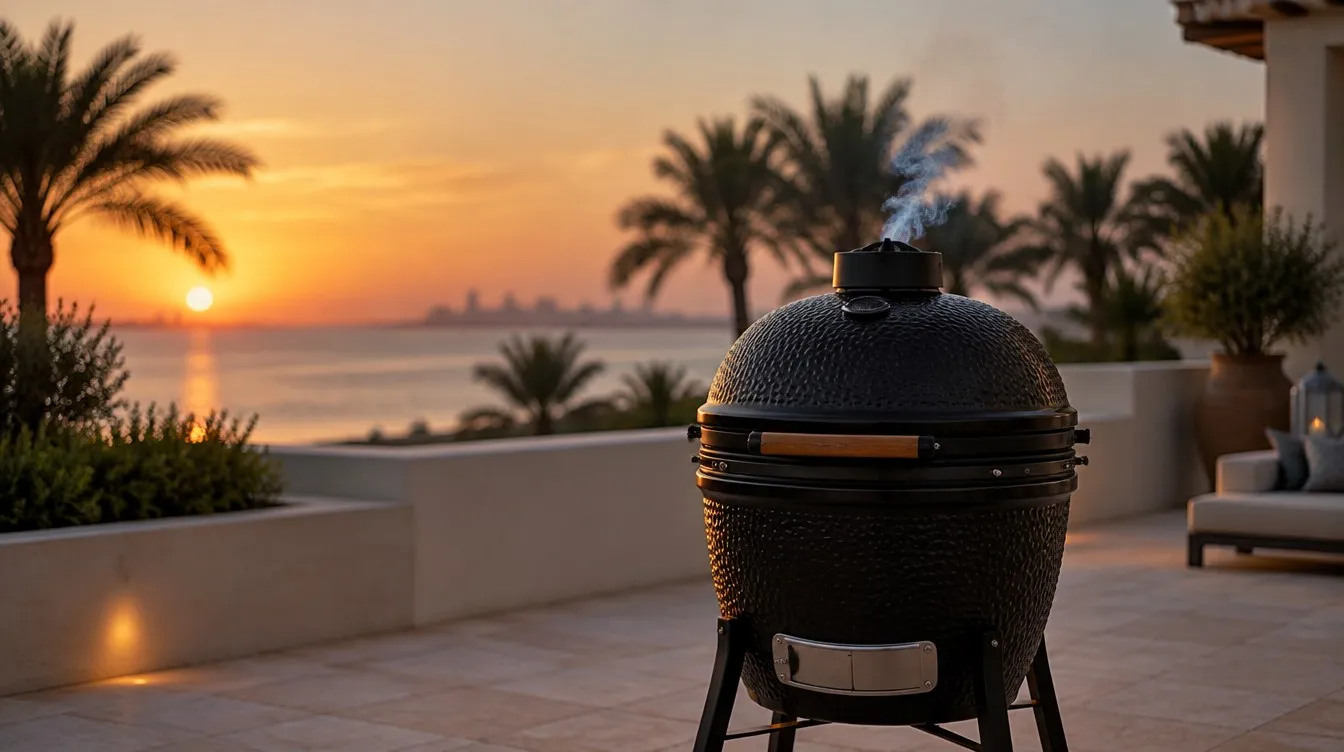
Thin blue smoke is what you’re looking for (illustrative image).
Set the dome to 125°C before midnight, go to bed, wake up to brisket. That’s the promise of a kamado.
Kamado low and slow means indirect heat, a full load of lump charcoal with a few wood chunks buried in it, both vents barely open, a dome at about 110–135°C, and the lid kept shut. It’s less work than it sounds. Thick ceramic does the hard part, and your job is patience.
This guide covers kamado smoking from setup to slice, using the settings from our own recipes. For the basics, start with how to use a kamado grill.
The kamado low and slow setup in five steps
- Fill the fire box with lump charcoal and bury 2–3 wood chunks through it.
- Light one spot in the centre.
- Fit the heat deflector, then the grate.
- Set the vents: top vent a 2–3 mm crack, bottom door about a finger’s width.
- Let it settle until the smoke runs thin and blue, then add the meat and shut the lid.
Now, the reasons behind each step, because they’re what you’ll need when something goes differently.
Why a full load, and one spot
A long cook needs enough fuel to finish, and any coal left over lights again next time, so you lose nothing by loading plenty. Big pieces at the bottom and smaller ones on top let the air through. (Here’s what to buy.)
Lighting one spot is the key. The fire starts small and slowly works outward through the load over the night. Light the whole bed and you’ll overshoot, then burn through your fuel far too quickly. Never use lighter fluid: ceramic soaks it up, and you’ll taste it for days.
Why the wood goes in the coal
Buried through the charcoal, chunks catch one at a time as the fire reaches them, instead of all going up at once. Our recipes use oak; hickory and cherry also work well. Go easy, because you can add more wood next time, but you can’t take smoke back out of a brisket. Kamado Joe suggests one chunk for poultry and fish, and 2 to 4 for big cuts. Our brisket uses 3.
Why the deflector
The heat deflector sits between the fire and the food, so meat cooks in hot air and smoke rather than over flame. Low and slow doesn’t work without one. It isn’t in the box: the heat deflectors come with our Divide & Conquer system, which fits every size.
Skip the water pan
You don’t need one for smoking. A kamado draws so little air that moisture stays in the dome, and Kamado Joe says the same. None of our smoking recipes use a water pan.
Kamado smoking temperature: what our recipes use
Low and slow generally means about 110–135°C at the dome. Here’s where our three smoking recipes sit:
| Cook | Dome temp | Coal + wood | Top vent | Bottom door | Time | Fits |
|---|---|---|---|---|---|---|
| Lamb shoulder matfoon | 120°C | 3.5 kg lump + 2 oak chunks | A 2 mm crack | One finger | 10 h | 18″ and up |
| 18-hour brisket | 125°C | 4 kg lump + 3 oak chunks | A 2 mm crack | One finger | 16–18 h | 23″ and up |
| Beef ribs | 130°C | 3 kg lump + 2 oak chunks | A 3 mm crack | A finger and a half | 8 h | 18″ and up |
These settings are for our kamados. Vents differ by brand and every fire behaves slightly differently, so treat them as starting points. For every temperature up to 350°C, see our vent settings chart.
An overnight cook, hour by hour
This is how our 18-hour brisket actually runs, so you know what to expect and when.
| When | What you do | What’s happening |
|---|---|---|
| The afternoon before | Trim the fat to about 6 mm and season | The salt gets a head start |
| 22:00 | Load 4 kg of lump and 3 oak chunks, light one spot, deflector in, vents set | The fire starts small |
| 22:00–midnight | Hold the dome at 125°C for 30 minutes | Smoke goes from white to thin and blue |
| Before midnight | Brisket on, fat side up, probe in the flat, lid shut | Go to bed |
| Hours 8–13 | Nothing | The stall: internal temperature parks at 65–70°C for hours |
| At the stall | Once the bark is set and dark, wrap in butcher paper brushed with tallow, and put it back | The cook starts moving again |
| Hours 16–18 | Check with the probe | Done at about 95°C, when the probe slides in like butter |
| The last hour | Rest it, still wrapped | Then slice the flat and cube the point |
The stall frightens everybody once. The temperature stops climbing for hours, and it’s tempting to open the lid or the vents. Don’t. It’s normal, and it passes.
For safe minimum temperatures, check the USDA’s safe temperature chart. Large cuts like brisket are cooked well beyond them for tenderness.
Reading the smoke: thin blue vs thick white
Your eyes are a good gauge here.
- Thin and blue, or barely visible: clean fire. This is when the meat goes on.
- Thick and white: the fire hasn’t settled, the wood has just caught, or the coal is damp. Wait with the lid closed.
- White smoke after hours of clean running: a new chunk has probably caught. Leave it, because it usually clears by itself.
Our recipes settle for 20 to 30 minutes at temperature before the meat goes on. Give it longer if the smoke still looks heavy.
Overshot the temperature? Stay calm
Thick ceramic is slow to heat and slow to cool. If the dome races past your target before the meat goes on:
- Keep the lid shut. Opening it feeds the fire.
- Close the bottom door most of the way, and the top vent a little.
- Wait. Coming back down takes time.
Prevention is easier: light one spot, and close the vents halfway before you reach your target. If you’re a few degrees over on a long cook, leave it alone. Your brisket won’t mind, but constant vent changes can leave the fire swinging. We go deeper on this in our temperature guide.
Low and slow in UAE conditions
Most smoking advice is written for cool climates. A few things are different here:
- Start in the evening. It’s more pleasant for you, and an overnight cook means less time in the full heat of the day.
- Expect hot days to change things. The fire may climb more easily when it’s hot outside, so start closing the vents early and make small moves.
- Watch the wind. A shamal can push extra air through the vents. Choose a sheltered spot for an overnight cook.
- Keep your coal dry and sealed. Coastal humidity makes it slow to light, and sand gets into open bags.
- Close both vents when you’re finished, which also keeps sand out of the fire box.
And some rules that apply everywhere: smoke outdoors only, on a stable surface, away from anything that can catch fire. Never bring lit coals indoors (Dubai Municipality’s barbecue safety advice says the same). The dome stays hot for hours, so keep children and pets clear.
Lamb, the Gulf way
Low and slow isn’t only American barbecue. Matfoon comes from the underground-pit tradition: low, even heat, sealed in, for hours. A kamado does the same job above ground.
Our lamb shoulder matfoon rubs a bone-in shoulder with bezar, loomi, garlic and ghee the night before. It smokes at 120°C for six hours, then goes into two layers of foil with saffron water for about four more, until the blade bone wiggles loose at around 95°C. Close both vents and rest it in the cooling dome for an hour. Cook the rice in the juices from the foil.
If you’ve never smoked anything, start here or with beef ribs. Both fit from the 18″ up, and both finish on the same day.
Which kamado size suits smoking?
Every size can cook low, but the cut decides how big you need to go. A whole packer brisket needs a 50 cm grate, so our brisket recipe starts at the 23″ Dreadnought, which holds 125°C for eighteen hours. The 23″, 25″ and 27″ also come with a smoker chute. Ribs and lamb shoulder fit from the 18″. Not sure? Here’s what size kamado you need.
Accessories that help
- Divide & Conquer system: includes the heat deflectors you need for indirect cooking.
- Hot smoker box: wood chips set in the coals, for an extra layer of smoke.
- Cold smoke generator: one spiral of sawdust smokes for 4 to 7 hours, for cheese, fish and cured meats.
- A probe thermometer, so you can check the meat without opening the lid.
One load of coal, a 2 mm crack, patience
That’s kamado low and slow. Build the fire right, settle it before the meat goes on, then leave it alone. Most of what goes wrong in smoking comes from touching things that were fine. Afterwards, here’s how to clean a kamado after a long smoke.
Light it before midnight. Cook the 18-hour brisket →
Questions people ask
Can you smoke on a kamado grill?
Yes, and it's one of the best things a kamado does. Thick ceramic holds a low temperature on very little air, so one load of lump charcoal can run all night. Fit the heat deflector for indirect heat, bury a few wood chunks in the coal and keep the lid shut.
What temperature should a kamado be for low and slow?
Low and slow usually means about 110–135°C at the dome. Our recipes smoke lamb shoulder at 120°C, brisket at 125°C and beef ribs at 130°C. Pick your number, settle the kamado there until the smoke runs thin and blue, then add the meat.
How long can you smoke on a kamado?
On a full fire box of lump, a long time. Our brisket takes 16 to 18 hours on one 4 kg load at 125°C, with the top vent open a 2 mm crack. Food is done when it reaches temperature, so plan your timings with some room to spare.
When do you use the heat deflector on a kamado?
Any time you cook indirect, including smoking, low and slow, roasting and baking. The deflector sits between the coals and the grate, so food cooks in hot air and smoke, not over flame. Take it out for direct grilling and searing.
Do I need a water pan in a kamado?
Not for smoking. A kamado uses very little air, so it loses far less moisture than an open smoker, and none of our smoking recipes use one. A drip pan on the deflector is useful for catching fat on roasts.
Why is my kamado smoking too much?
Thick white smoke usually means the fire hasn't settled, the wood has just caught, or the coal is damp. Keep the lid closed and wait until the smoke turns thin and blue before you add the meat. Dry lump charcoal helps most.
How much wood should I use for smoking on a kamado?
Less than you think. Our brisket uses 3 oak chunks, and our beef ribs and lamb shoulder use 2. Kamado Joe suggests one chunk for poultry and fish. Bury the chunks through the coal, not on top, and add more next time if you want more smoke.
Can you cold smoke on a kamado?
Yes, with a cold smoke generator rather than a charcoal fire. One spiral of sawdust smokes for 4 to 7 hours with very little heat, for cheese, fish and cured meats. In the UAE, the cooler months suit it best, because the chamber needs to stay cool.
FROM THE KILN
LIGHT IT BEFORE MIDNIGHT.
One load of coal, a 2 mm crack in the top vent, and 16 to 18 hours of patience. The full recipe has every step, from trim to slice.
KEEP
READING.
ALL GUIDES → HOW-TO
Kamado Vent Settings and Temperature Guide: 120°C to 350°C+
Kamado vent settings from 120°C to 350°C+, taken from our recipes: smoking, roasting, searing and pizza. Plus how to fix overshoot and hold all night.
 HOW-TO
The Best Charcoal for a Kamado: Lump Charcoal vs Briquettes
Which charcoal belongs in a kamado? Lump vs briquettes, coconut and binchotan, how much each cook uses, and what charcoal really costs in the UAE.
 HOW-TO
How to Use a Kamado Grill: The Complete Guide
How to use a kamado grill, start to finish: charcoal, lighting, vents, direct and indirect heat, burping, shutting down and cleaning, UAE edition.