
HOW-TO
Kamado Vent Settings and Temperature Guide: 120°C to 350°C+
Kamado vent settings from 120°C to 350°C+, taken from our recipes: smoking, roasting, searing and pizza. Plus how to fix overshoot and hold all night.
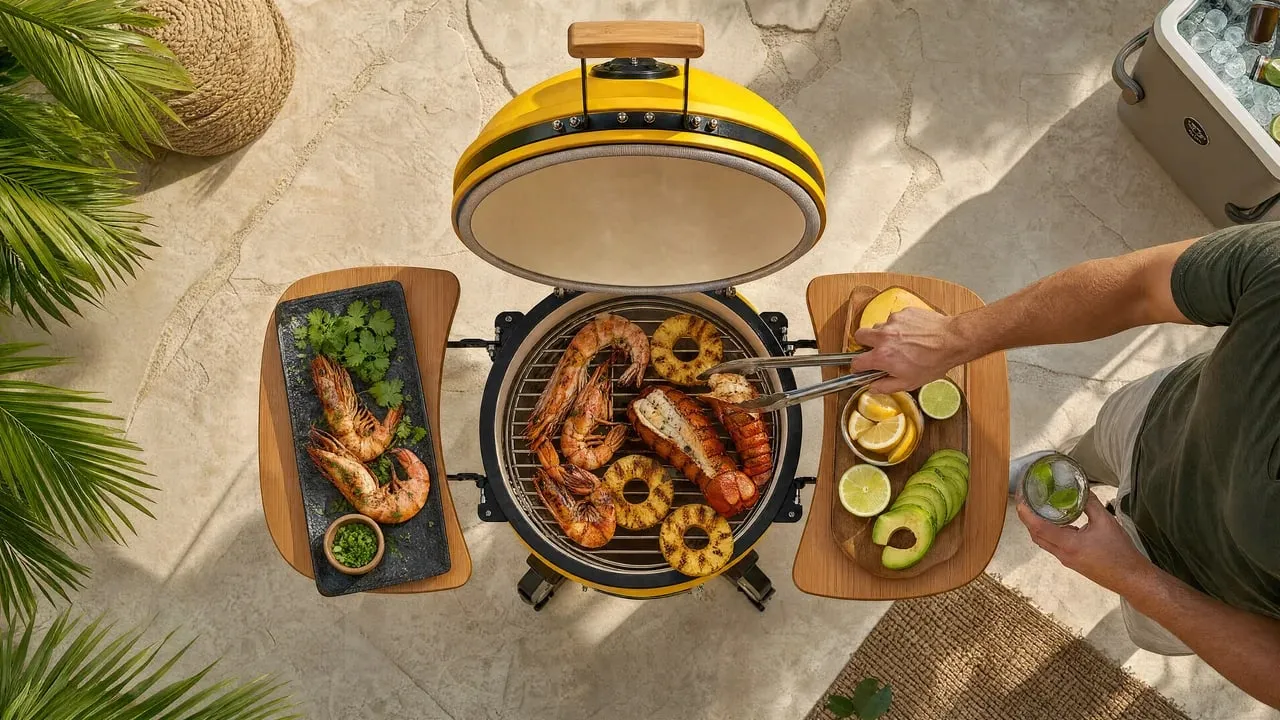
Two vents. That’s the whole control panel.
Kamado vent settings in one line: use the bottom door for big temperature changes and the top vent to fine-tune. For low and slow at 120–130°C, open the top vent a 2–3 mm crack and the bottom door about a finger’s width. For roasting at 180°C, top half open, bottom two fingers. For searing and pizza above 300°C, open both fully.
Every setting below comes from one of our own recipes, in Celsius, with the coal load that goes with it. Kamados vary and so does the weather, so treat them as starting points. New to all this? Start with how to use a kamado grill, then come back.
Kamado vent settings chart (°C)
Find your dome temperature, set both vents, and load the coal shown. The last column is the recipe each row comes from, so you can see the settings in a real cook.
| Dome temp | Cook | Heat deflector | Coal load | Top vent | Bottom door | Recipe |
|---|---|---|---|---|---|---|
| 120°C | Long smoke | In | 3.5 kg lump + 2 oak chunks | A 2 mm crack | One finger | Lamb shoulder matfoon |
| 125°C | Overnight smoke | In | 4 kg lump + 3 oak chunks | A 2 mm crack | One finger | 18-hour brisket |
| 130°C | Smoke | In | 3 kg lump + 2 oak chunks | A 3 mm crack | A finger and a half | Beef ribs |
| 180–200°C | Roast and bake | In | Half the fire box | Half open | Two fingers | Roast chicken, sea bream |
| 250°C | Direct grill | Out | Half the fire box, fully lit | Half open | Half open | Shish tawook |
| 280°C | Hot direct, cast iron | Out | Half the fire box, fully lit | Three-quarters open | Fully open | Charred prawns |
| 300°C+ | Sear | Out | Fill to the fire ring | Fully open | Fully open | Tomahawk, sear stage |
| 350°C+ | Pizza | In, stone on the grate | Fill to the fire ring | Fully open | Fully open | Stone-baked pizza |
All temperatures are dome temperatures, read on the built-in thermometer. “One finger” means the door is open by the width of one finger.
Three notes on reading it:
- The heat deflector isn’t in the box. It comes with our Divide & Conquer system, which fits every size. The pizza stone fits the 21″ and up.
- The coal load matters as much as the vents. The same vent position gives a different temperature on a full fire ring than on a small bed of coal. That’s why the tomahawk’s short low stage holds 120°C with the top vent a quarter open and the bottom door at two fingers: more coal, for a cook that is about to go much hotter.
- Size can change the numbers. These settings come from recipes written for different kamado sizes, and a smaller fire box may need smaller openings. Start here and adjust.
Why two vents are enough
Fire needs air, and a kamado is sealed everywhere except these two openings. Control the air and you control the fire.
The bottom door feeds the fire
Air enters at the bottom and passes straight through the coal. More air means a bigger fire, so this is your throttle. Use it for the big moves.
The top vent fine-tunes it
Hot air and smoke leave through the cast-iron top vent, and that pull draws fresh air in below. Small changes here make small changes in the dome, which is exactly what you want once you’re close. During a cook, keep it at least slightly open. Close it fully only when you want the fire out.
Why ceramic is slow to respond
Thick ceramic stores a lot of heat. That’s why it holds a steady temperature all night, and also why it won’t obey you straight away. Change a vent, and the thermometer takes a while to tell you what you did. Move a vent by about a finger’s width, then wait ten minutes before you judge it.
How to hit a target temperature without overshooting
It’s far easier to climb to a temperature than to come back down from one. So approach it slowly:
- Light the right fire. One spot in the centre for low and slow. A fully lit bed of coal for hot cooks.
- Leave both vents open while it climbs.
- Close both vents halfway before you reach your target. Don’t wait until you get there.
- Set the chart position as the dome approaches the temperature you want.
- Wait ten minutes, then make one small move if you need to.
- Let it settle before the food goes on. Our brisket sits at 125°C for 30 minutes, until the smoke runs thin and blue.
Keep a note of what works. Owners on the AmazingRibs forum recommend mapping your own kamado’s settings, one temperature at a time, and it’s good advice. After a few cooks you won’t need this chart.
Kamado too hot? How to lower the temperature
Every kamado owner overshoots eventually. Here’s the fix:
- Keep the lid shut. Opening it feeds the fire a rush of oxygen, and the temperature climbs again.
- Close the bottom door most of the way. This does most of the work.
- Close the top vent a little. Don’t shut it completely unless you want the fire out.
- Be patient. Ceramic gives heat back slowly, so a big overshoot takes time to come down.
If you’ve gone a few degrees over on a long cook, leave it. Chasing small differences with big vent moves is how a steady fire turns into a seesaw.
Kamado not getting hot? How to raise the temperature
Work down this list in order. The first one is the usual culprit.
- Clear the old ash. Ash blocks the air, so do this before every cook.
- Check the charcoal grate. Small bits of coal can clog it and choke the fire. Use large pieces of hardwood lump: here’s the best charcoal for a kamado, and why.
- Open both vents fully.
- Add coal, up to the fire ring for searing or pizza. A small bed of coal can’t reach those temperatures however wide the vents are.
- Give it time. The ceramic has to heat up too.
Holding one temperature all night
This is where a kamado earns its keep. For our 18-hour brisket:
- Fill the fire box with 4 kg of lump and bury 3 oak chunks through it.
- Light one spot in the centre.
- Put the deflector in, set the top vent to a 2 mm crack and the bottom door to one finger.
- Let the dome sit at 125°C for 30 minutes.
- Put the brisket on, close the lid, and go to bed.
The ceramic holds the line on that one load of coal for 16 to 18 hours. Our kamado low and slow guide walks through the whole night. When the internal temperature stalls around 65–70°C, don’t touch the vents. If you need to check on it, read the dome thermometer and leave the lid shut.
Weather can still nudge a long cook. Strong wind, such as a shamal, pushes extra air at the vents, so choose a sheltered spot for overnight cooks.
Dome temperature vs grate temperature
The thermometer reads the air in the dome, not the food and not necessarily the grate. That’s fine, because all our recipes quote the dome temperature, so your reading will match the recipe.
To know when food is done, use a probe thermometer. Our brisket comes off at about 95°C inside, for example, whatever the dome says. For safe minimum temperatures, check the USDA’s safe temperature chart.
Do you need a temperature controller?
Fan-driven temperature controllers are popular, and they work by blowing air into the bottom vent to hold a set temperature. They’re useful if you want alarms and readings on your phone. You don’t need one, though: our overnight brisket is set once by hand and left alone.
Vent and temperature troubleshooting
| What’s happening | Likely cause | What to do |
|---|---|---|
| Temperature keeps climbing | Vents closed too late | Keep the lid shut, close the bottom door most of the way, and wait |
| Temperature won’t climb | Ash, small coal or too little coal | Clear the ash and grate, add coal, open both vents |
| Temperature drops during a long cook | Fire short of air or coal running low | Open the bottom door a little, then wait ten minutes |
| Thick, white smoke | Fire hasn’t settled | Wait for thin, blue smoke before the food goes on |
| A vent won’t move | Sand or residue | Brush it clean when cold, and close both vents when not in use |
| Flames flare up when you open the lid | Lid opened all at once on a hot fire | Burp it: lift a few centimetres, wait a few seconds, then open |
Set it, then leave it
Those are the kamado vent settings we use. Bottom door for the fire, top vent for the fine-tuning, small moves, and patience. The rest is practice, and practice tastes good.
Settings sorted. Now cook the 18-hour brisket →
Questions people ask
How do you control the temperature on a kamado?
With air. The bottom door feeds the fire and makes the big changes; the top vent fine-tunes. Open them to go hotter and close them to cool down. Move a vent by about a finger's width, then wait ten minutes, because thick ceramic reacts slowly.
How do you lower the temperature on a kamado?
Close the bottom door most of the way, then the top vent a little, and keep the lid shut, because opening it feeds the fire. Ceramic holds heat, so a big overshoot takes time to come back. Next time, close the vents halfway before you reach your target.
How do you get a kamado hotter?
Open both vents fully and make sure air can get through. Clear the old ash and check that small bits of charcoal aren't blocking the charcoal grate. Add coal up to the fire ring for searing or pizza. With both vents fully open, a kamado runs past 350°C.
How hot can a kamado get?
Hot enough for pizza. Our stone-baked pizza recipe takes the dome past 350°C with both vents fully open and coal filled to the fire ring. Most cooking happens lower, between 120°C for smoking and about 300°C for searing.
What vent settings do I use for pizza?
Both vents fully open, coal filled to the fire ring, heat deflector in and the pizza stone on the grate. Let the dome pass 350°C, then give the stone 30 minutes to heat through. Burp the lid before each pie and close it for two minutes between pies.
What vent settings do I use for smoking?
For 120–125°C, open the top vent a 2 mm crack and the bottom door one finger's width, with the heat deflector in. For 130°C, use a 3 mm crack and a finger and a half. Let the dome settle until the smoke runs thin and blue before the meat goes on.
Why does my kamado temperature overshoot?
Usually because the vents were closed too late. Ceramic stores heat, so once the dome races past your target it is slow to come back. Light one spot for low cooks, close the vents halfway before you reach your target, and keep the lid shut.
Why is my kamado smoking so much?
Thick, white smoke usually means the fire hasn't settled, or fresh charcoal or wood is still catching. Wait with the lid closed until the smoke runs thin and blue before you put food on. If the problem continues, check that your coal is dry.
FROM THE KILN
NOW COOK THE BRISKET.
One load of coal, a 2 mm crack on the top vent, one finger on the bottom door, and 16 to 18 hours of not touching any of it.
KEEP
READING.
ALL GUIDES →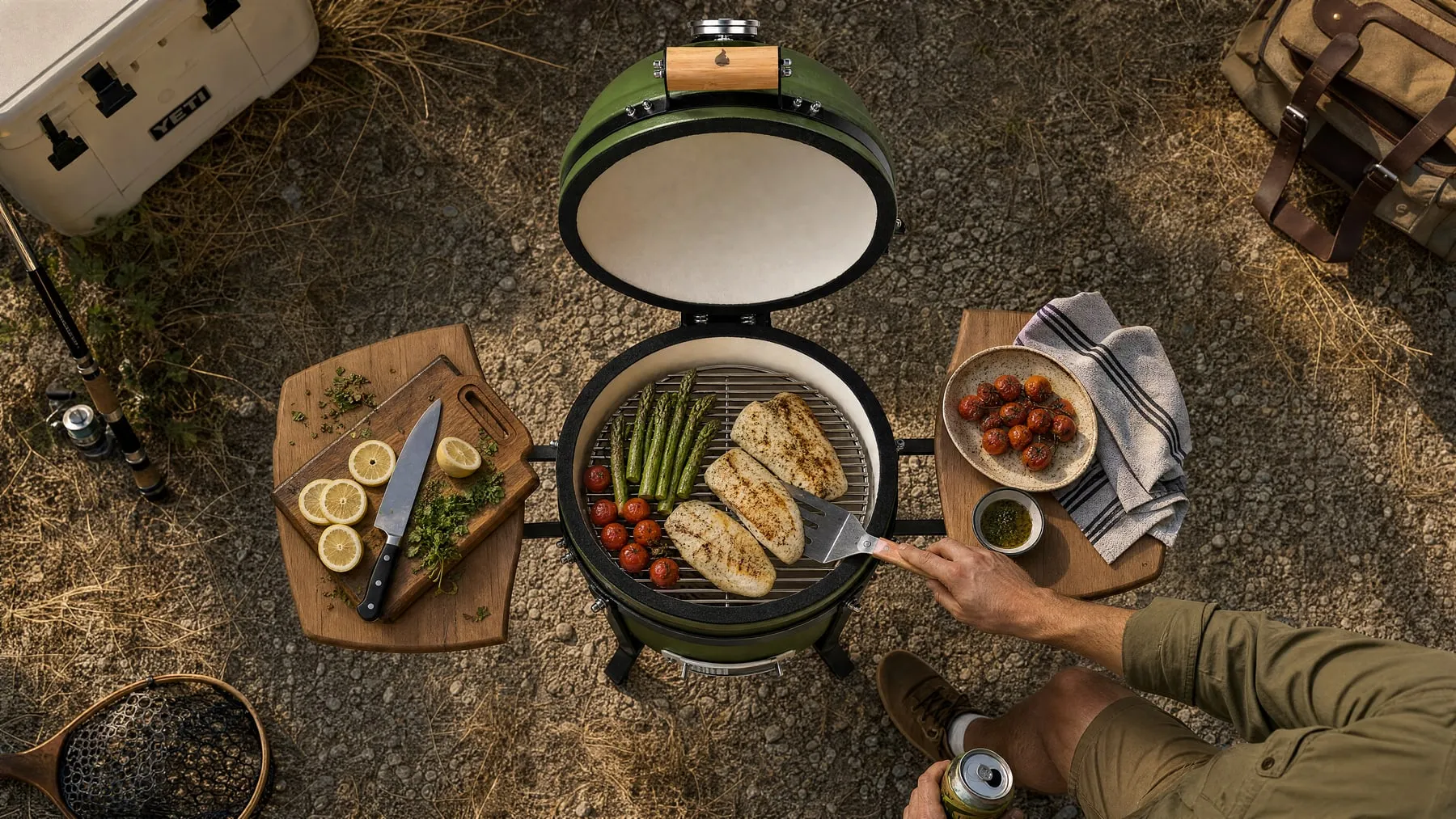 HOW-TO
How to Use a Kamado Grill: The Complete Guide
How to use a kamado grill, start to finish: charcoal, lighting, vents, direct and indirect heat, burping, shutting down and cleaning, UAE edition.
 BUYING GUIDES
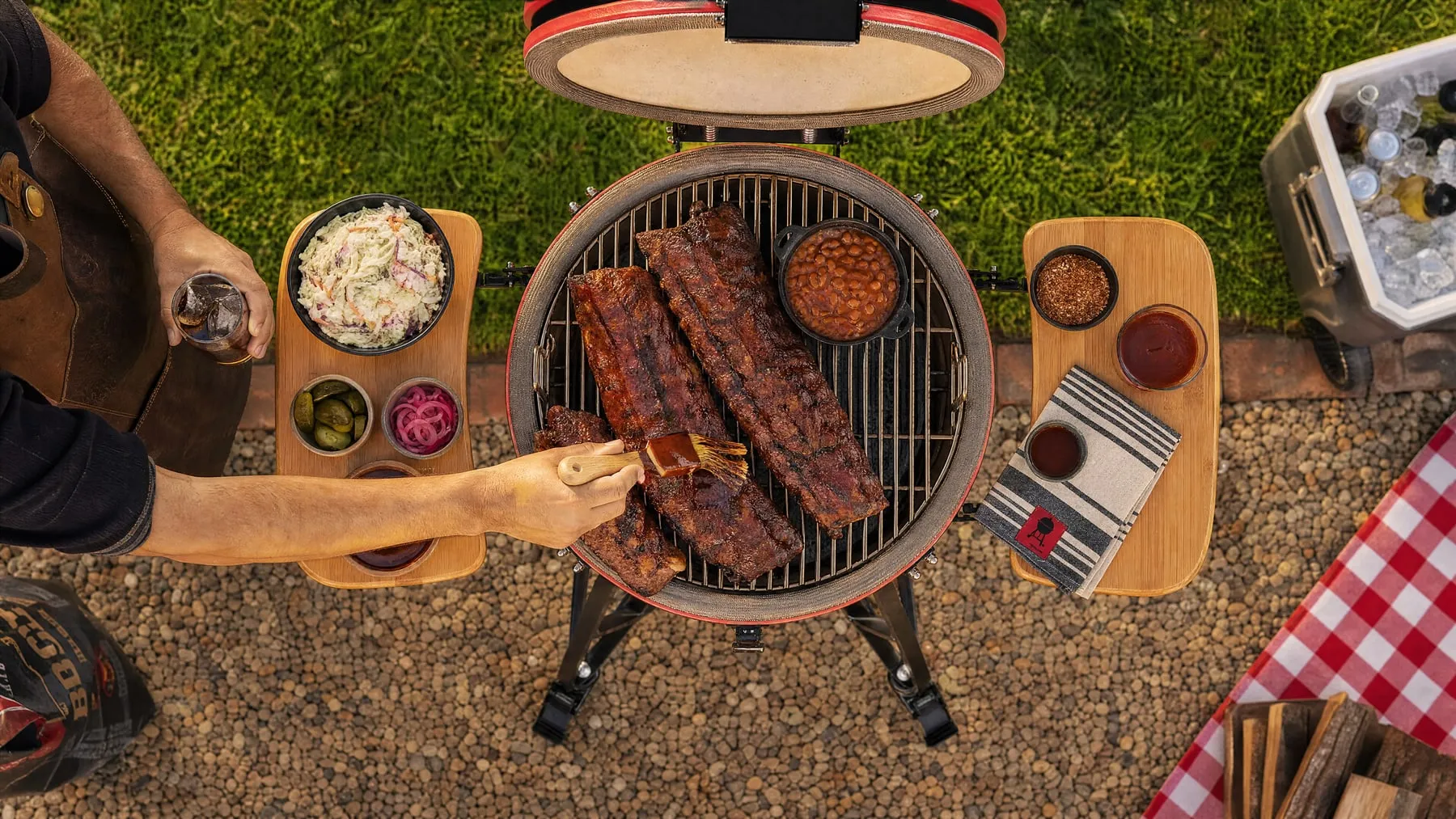
What Size Kamado Do I Need? Measure the Grate, Not the Label
What size kamado do you need? Compare real grate sizes in cm, who each feeds, what fits a brisket, and how much space you need in a UAE garden or terrace.
 HOW-TO
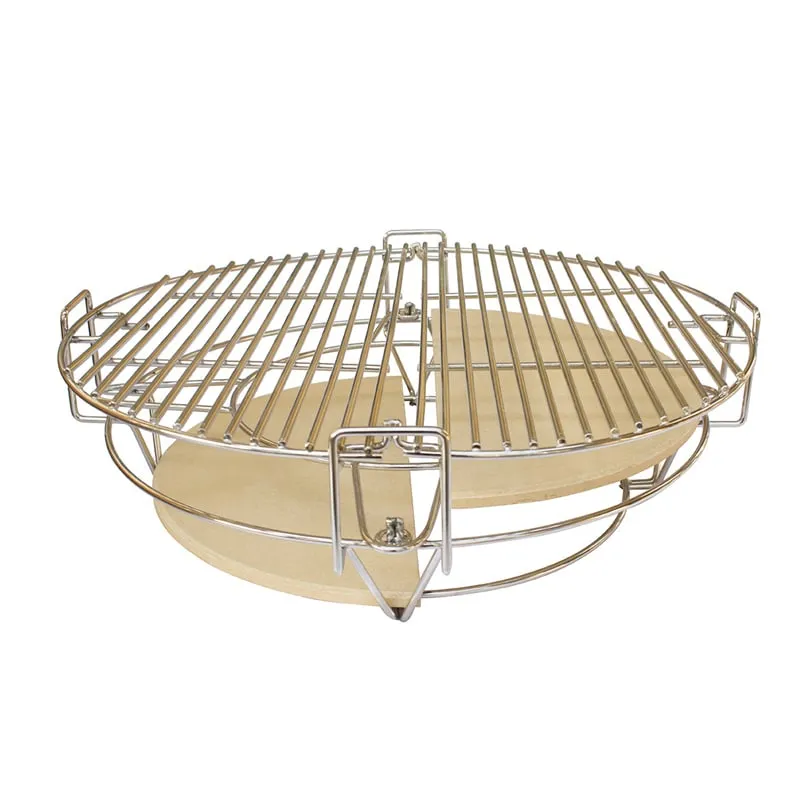
How to Cook Pizza on a Kamado Grill
How to cook pizza on a kamado: stone over a deflector, dome past 350°C, both vents open. The method, the mistakes, and what to buy in the UAE.