
BUYING GUIDES
Kamado vs Gas vs Kettle: Which Barbecue Fits the Way You Cook?
Kamado, gas or kettle? We compare speed, fuel, flavour, range, cleaning and UAE living, and say plainly when a gas grill or a kettle is the better buy.
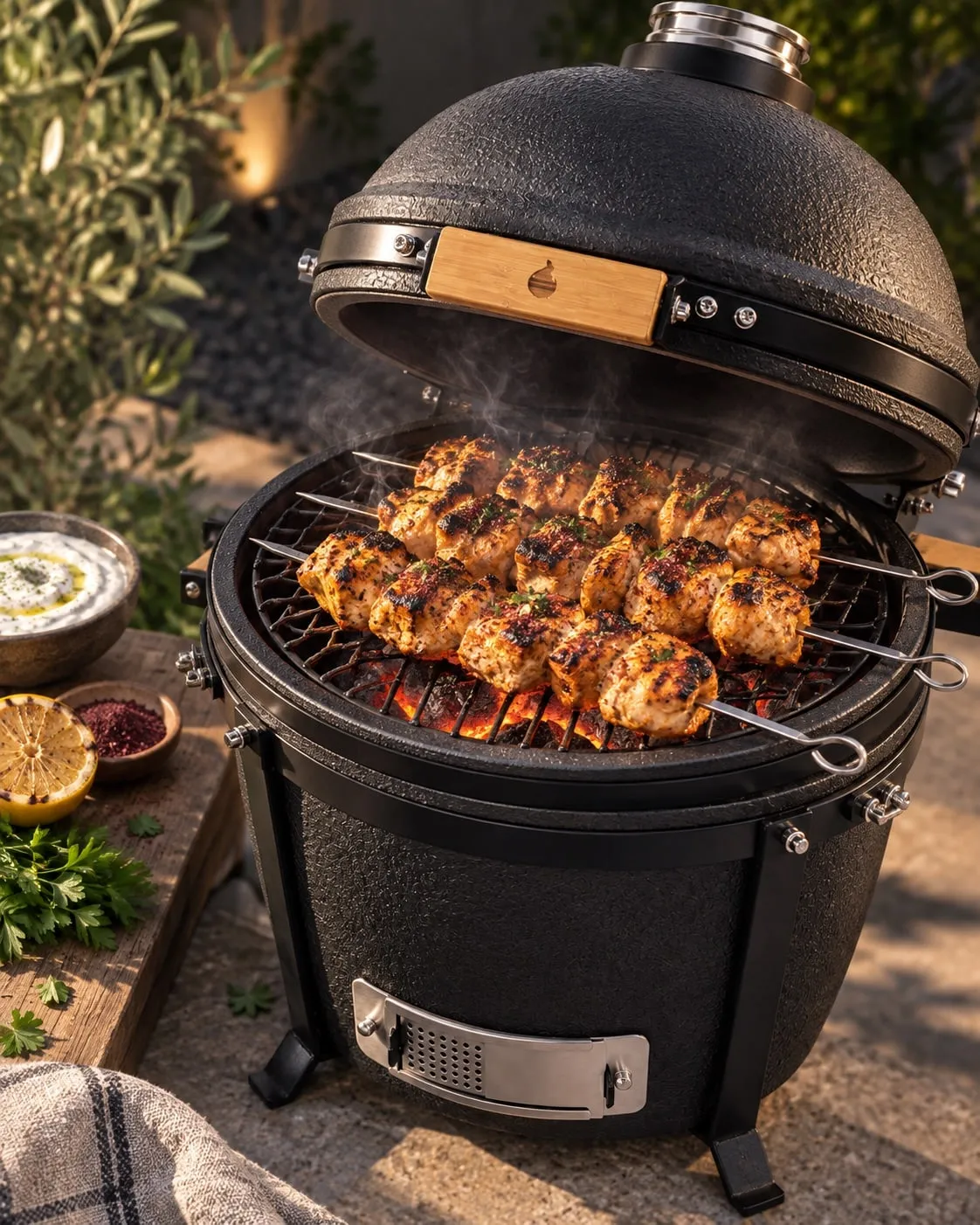
Every barbecue argument in a Dubai majlis ends up here: kamado vs gas grill, or a plain charcoal kettle?
The short answer: a gas grill is the fastest and easiest, on in minutes with heat on a dial and a mild flavour. A kettle is the cheapest way to cook over real charcoal. A kamado costs more but does everything, from overnight brisket at 125°C to pizza past 350°C, on modest fuel, and its ceramic body is built to last.
We make ceramic kamados, so read this knowing that. We have tried to keep it fair, and we say plainly where a gas grill or a kettle is the better buy. There are no other brands’ prices in here, because we have not published or re-checked them. Our own prices are in what a kamado costs in the UAE.
Kamado vs gas vs kettle: the comparison table
| Kamado (ceramic) | Gas grill | Kettle (charcoal) | |
|---|---|---|---|
| Fuel | Lump charcoal, plus wood chunks for smoke | LPG cylinder (or piped gas) | Charcoal, often briquettes |
| Time to cooking heat | Slowest: thick ceramic warms through | Fastest: light and go | Quicker than a kamado, slower than gas |
| Temperature range | Low and slow at 120–130°C to past 350°C | Strong at medium to high; hard to hold low with smoke | Wide, but drifts on long cooks |
| Heat control | Two vents; seals tight | A dial | Vents, but steel leaks heat and air |
| Low and slow | Overnight on one load (our brisket: 125°C, 16–18 hours, 4 kg lump) | Limited | Possible, with tending and refuelling |
| Searing | Past 300°C with both vents open | Good | Good over a full chimney of coal |
| Pizza and baking | Yes, stone on a deflector, dome past 350°C | Limited | Limited |
| Flavour | Charcoal and wood smoke | Clean; flavour from drippings | Charcoal and wood smoke |
| Fuel use | Low: ceramic holds the heat, leftover coal relights | Steady gas use while it runs | Higher: thin steel loses heat |
| Weight | Heavy: ours are 37 kg to 150 kg | Medium, on wheels | Light |
| Price | Highest: ours are AED 1,500 to AED 8,435 | Middle, with a wide spread | Lowest |
| Learning curve | A few cooks to learn the vents | Almost none | Moderate |
| Best for | One cooker that smokes, roasts, sears and bakes | Quick weeknight grilling | Learning charcoal on a budget |
Kamado figures are from our own product pages and recipes. Gas and kettle rows are general category descriptions, not tests of named models.
How each one works, and why it matters
Kamado: a ceramic oven you control with air
A kamado is a thick ceramic egg with a vent in the lid and a door at the bottom. Air comes in at the bottom, feeds the fire, and leaves through the top. More air, more heat. Less air, less heat. The walls soak up heat and give it back slowly, so once the dome settles it holds that temperature on very little fuel. Ours is triple-fired, with the glaze fused into the ceramic in the kiln. That mass is why a kamado can sit at 125°C all night, and also why it is heavy and slow to cool. More on that in how to use a kamado grill.
Gas grill: burners and a dial
A gas grill runs burners off an LPG cylinder or a piped supply. You turn a knob, press the igniter, and you are cooking soon after. The box is not sealed, so heat escapes and fuel keeps flowing to replace it. Gas itself burns clean, so the “barbecue” flavour comes from fat and juices hitting hot bars and turning to smoke. It is convenient and predictable, and it is very good at the burger-and-sausage weeknight.
Kettle: thin steel and charcoal
A kettle is a steel bowl and lid with vents top and bottom. It is light, cheap and honest: real charcoal, real smoke, and excellent direct grilling. The vents work, but thin steel loses heat fast and the lid does not seal tightly, so temperatures drift on long cooks and you add fuel more often. Many people learn charcoal on a kettle, and plenty never need anything else.
Kamado vs gas grill
Speed and convenience: gas wins
Be honest about your Tuesday. If dinner is burgers at 7:30 after work, gas is hard to beat: on, hot, done, off. A kamado needs coal lit and the dome settled. A chimney starter gets you a fully lit bed of coal in minutes, and hot direct cooks come up fastest. But it is never the turn of a knob. If speed matters most, buy gas, and we mean that.
Flavour: charcoal and wood vs clean gas
The “gas bbq vs charcoal taste” question has a clear answer on long cooks and a smaller one on short ones. A steak seared for two minutes a side tastes of the steak either way. A brisket, beef ribs or a lamb shoulder matfoon that spends hours in lump charcoal and oak smoke tastes completely different from anything a gas grill can produce, because gas brings no smoke of its own. Smoker boxes on gas grills help a little. They do not close the gap.
Range: low and slow to 350°C+
This is where the kamado pulls away. The same grill runs an 18-hour brisket at 125°C on one 4 kg load of lump, then, on another day, a stone-baked pizza with the dome past 350°C. Gas grills are built for medium to high heat in an open-ish box. Holding 110–130°C for many hours, with real smoke, is not what they are designed to do.
A kamado also does a proper reverse sear in one session. Our tomahawk cooks gently at 120°C, then both vents open and about ten minutes later the dome passes 300°C for the crust.
Cleaning and maintenance
A kamado cleans itself with fire. Run it hot with the dome closed and the residue burns off, then brush the grate and clear the ash before the next cook. No soap inside, ever. How to clean a kamado has the full routine. A gas grill has burners, a grease tray, igniters and hoses to keep clean and check. Neither is hard. They are just different jobs.
Kamado vs kettle
Heat retention and fuel use
This is the core of “kamado vs weber kettle”. Thick ceramic holds heat. Thin steel lets it go. On a short, hot cook the difference is small. On a long one it is large: our brisket runs overnight on one 4 kg load of lump, and when you close both vents at the end the fire goes out and the leftover coal lights again next time. A kettle on a long cook usually needs refuelling, and steel loses more heat in between.
Control
A kamado seals tight, so the vents decide how much air reaches the fire. Small moves, then wait ten minutes. A kettle leaks air around the lid, so it runs hotter and drifts more, and you chase it with the vents. For direct grilling that barely matters. For a steady 125°C overnight it is the whole game. The vent and temperature guide shows the kamado settings.
Price and portability
The kettle wins both, clearly. A kettle costs a fraction of a ceramic kamado and one person can carry it. Ours start at AED 1,500 for the 15″ Picnic, which still weighs 37 kg, so bring a friend. From the 18″ Compact up, the kamado rolls on its cart once it is set up. A kettle is a very good grill for its price. A kamado is a different tool.
Charcoal vs gas: flavour, health and safety
Flavour. Wood and lump charcoal give off smoke that flavours food. Gas does not. That is the whole flavour argument, and it is real on long cooks.
Health. Charring, flare-ups and fat dripping into a flame apply to every grill, whatever the fuel. Trim excess fat, keep flare-ups down by closing the lid between turns, and do not eat food burnt black. We make no health claim for charcoal over gas, or the other way round.
Safety. Burning charcoal gives off carbon monoxide, so it must only ever burn in the open air, never indoors, in a garage or in any enclosed space. With gas, keep the cylinder upright, outdoors and out of the sun, and check hoses and connections for leaks before you light. If you live in a tower, read the rules on balcony barbecues in Dubai before buying either.
What each one really costs in the UAE
We will not quote other brands’ prices here: they change, and we have not re-checked them. The shape of the market is simple, though.
| Kettle | Gas grill | Ceramic kamado (Burnt Carbon) | |
|---|---|---|---|
| Upfront price | Lowest | Middle, wide spread by size and burners | AED 1,500 (15″) to AED 8,435 (27″) |
| Running fuel | Charcoal; more per long cook | LPG refills | Lump charcoal; leftover coal relights |
| What wears | Steel bowl, grates | Burners, igniter, hoses, grates | Wear parts such as the grates and thermometer |
| What lasts | Depends on the steel and coating | Depends on the build | Ceramic body: 25-year warranty against material defects |
For a kamado, fuel is easy to work out from our recipes. Burnt-Carbon Coal is AED 150 for an 8 kg bag. Our brisket loads 4 kg for the whole overnight cook. A lamb shoulder takes 3.5 kg, and beef ribs 3 kg. A roast chicken or a round of shish tawook uses about half the fire box. Close both vents at the end and what is left in the fire box lights again next time, so a bag stretches further than the loads suggest. Lump charcoal vs briquettes covers what to burn and why.
The full size-by-size AED table, and what is in the box, is in what a kamado costs in the UAE. Every grill ships free to all seven emirates, with assembly arranged.
Living with it in the UAE
Summer sun, sand and the shamal
Ceramic and a kiln-fused glaze do not mind a Dubai summer: ours is fired three times so it can stand up to one. Painted steel and plastic parts on any grill age faster in strong sun, and sand gets into anything with a gap. On a kamado, close both vents whenever it is cold so sand stays out of the fire box, and after a shamal brush off the grates and check both vents still move freely. Gas grills collect sand in burners and venturi tubes, so check them before lighting. Our owner’s guide covers the rest of kamado care in UAE heat and sand.
Villas, terraces and balconies
A villa garden suits all three, subject to your community rules. Apartment balconies are a different matter: many buildings restrict barbecues, whatever the fuel. With gas, think about where the cylinder lives. With charcoal, never in an enclosed space. Check before you buy, not after.
Moving it
A kettle goes anywhere. A gas grill rolls. A kamado is a place, not a trip: ours weigh from 37 kg (15″) to 150 kg (27″), with wheels from the 18″ up, and the 27″ needs about 90 cm of clear access for delivery. Decide where it lives first. What size kamado you need helps with that.
Which should you buy? Scenarios
Choose a gas grill if…
- Most of your barbecues are quick weeknight burgers, sausages and kebabs.
- You want heat in minutes and off with a knob.
- You are not interested in smoke or long cooks.
Choose a kettle if…
- You want to learn charcoal without a big spend.
- You grill direct most of the time and cook long only occasionally.
- You need to move it often, or carry it to a desert camp.
Choose a kamado if…
- You want one cooker that smokes, roasts, sears and bakes pizza.
- You will cook low and slow: brisket, ribs, lamb shoulder.
- You cook for four to twenty-plus and want the grill to stay put. Read what size kamado you need next.
The quick decision:
- Weeknight burgers only, no interest in smoke → gas.
- Learning charcoal on a budget → kettle.
- Smoke, roast, sear and bake with one cooker → kamado.
And pellet grills?
A pellet grill feeds wood pellets into a fire pot with an auger and a fan, holding a set temperature automatically. It is genuinely set-and-forget for smoking. The trade-offs: it needs mains power outside, it has electronics to look after, and many models are not built for hard searing or pizza heat. A kamado needs no socket, sears past 300°C and bakes past 350°C. If you want push-button smoking and have power by the grill, a pellet grill is a fair choice.
The honest downsides of a kamado
- Weight. 37 kg is the small one. It is not going camping with you every weekend.
- Price. It costs more than a kettle or a mid-range gas grill. You are paying for ceramic and kiln time.
- Slow to cool. If you overshoot, ceramic takes a long time to come back down. Close the vents before you reach your target.
- The vents take a few cooks to learn. Small moves, then wait.
- Ceramic is tough, not invincible. The 25-year warranty covers the ceramic body against material defects. A drop or a hard knock is not a material defect, so lift it with enough people.
The verdict
Kamado vs gas vs kettle comes down to how you cook on a Thursday night and what you want to cook on a Friday. If Thursday is everything, buy gas. If you want charcoal and a small budget, buy a kettle. If Friday means brisket, a lamb shoulder or pizza for the whole family, a ceramic kamado is the one grill that does all of it. We would say that, of course, which is why we told you when not to buy one.
Decided it’s a kamado? Find your size →
Not sure how big? Read what size kamado do I need, or check the FAQ.
Questions people ask
Are kamado grills worth it?
If you will smoke, roast and sear rather than only grill burgers, yes. One ceramic kamado does the work of a grill, a smoker and a pizza oven, runs on a modest load of lump charcoal, and our ceramic body carries a 25-year warranty against material defects. If you only want quick weeknight burgers, a gas grill is cheaper and faster.
Is a kamado better than a Weber kettle?
For heat retention and control, yes. Thick ceramic holds a steady temperature on less fuel, and the vents seal tight, so a long smoke at 125°C is far easier. A steel kettle is lighter, much cheaper and very good at direct grilling. For occasional burgers and kebabs, a kettle is enough. For overnight cooks or pizza at 350°C+, the kamado wins.
Is gas or charcoal better for flavour?
Charcoal, if you want smoke. Lump charcoal and a chunk of oak add flavour that gas cannot, because gas burns clean. On a quick steak the gap is smaller than people claim. On brisket, ribs or a lamb shoulder it is obvious. Gas tastes of the food and its drippings; charcoal adds a layer on top.
Which barbecue is best for beginners?
Gas is the easiest to start on, and a kettle is the cheapest way to learn charcoal. A kamado is a good first charcoal grill if you are patient. Light a small fire, close the vents before you reach your target, and keep the lid shut. Start with a whole roast chicken at 180°C, which is very hard to get wrong.
Why are kamado grills so expensive?
The price is the ceramic. A kamado body is thick, heavy and slow to make. Ours is fired three times, weighs 37 kg to 150 kg depending on size, and a glaze that is not in stock takes about ten weeks to fire to order. You pay for material and kiln time, not burners or electronics. Our kamados run from AED 1,500 to AED 8,435.
Does a kamado take long to heat up?
Longer than gas, because thick ceramic has to warm through. Hot, direct cooks come up fastest on a fully lit bed of coal from a chimney starter. For low and slow, our recipes let the dome settle at temperature for 20 to 30 minutes before the meat goes on. Gas is quicker, which is its biggest advantage.
Kamado vs pellet grill, which is better?
Pellet grills hold a set temperature automatically with a fan and an auger, but they need mains power outside, and many are not built for hard searing. A kamado needs no electricity, sears past 300°C and bakes pizza past 350°C. If you want push-button smoking and have a socket by the grill, pellets work. For range, the kamado wins.
Can you use a gas grill or a kamado on a Dubai balcony?
Assume not until your building says yes in writing. Many Dubai buildings restrict balcony barbecues, and charcoal must only ever burn in the open air, never in an enclosed space. Villa gardens depend on your community rules and tenancy. Our BBQ rules guide sets out what is in the law and what is not. This is not legal advice.
FROM THE KILN
DECIDED IT'S A KAMADO?
Six sizes from the 15″ table-top to the 27″. Free delivery to all seven emirates, assembly arranged, and a 25-year warranty on the ceramic body.
KEEP
READING.
ALL GUIDES →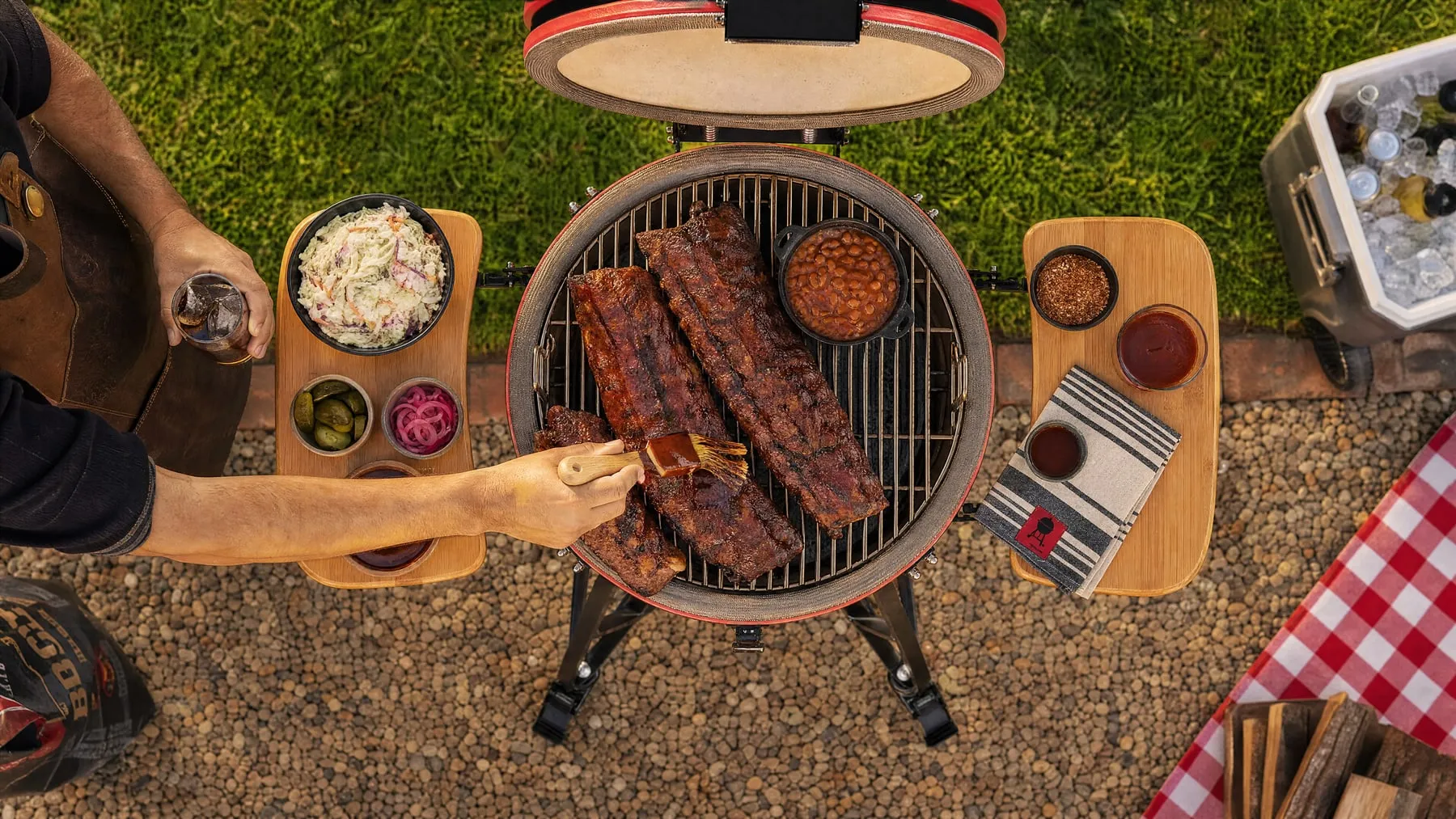 BUYING GUIDES
What Size Kamado Do I Need? Measure the Grate, Not the Label
What size kamado do you need? Compare real grate sizes in cm, who each feeds, what fits a brisket, and how much space you need in a UAE garden or terrace.
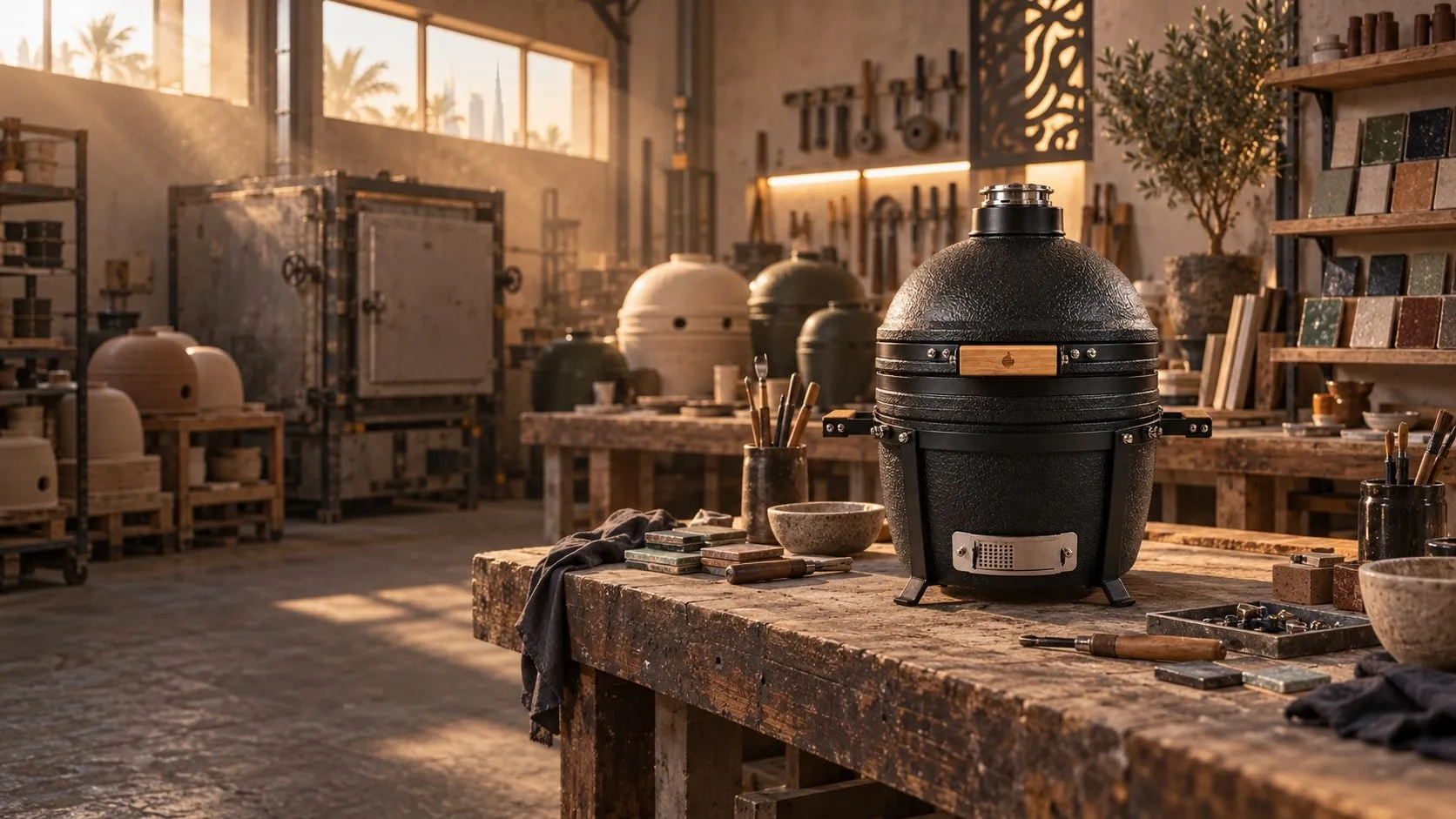 BUYING GUIDES
The Best Kamado Grills in the UAE (2026): An Honest Roundup from a Kamado Maker
The best kamado grills you can buy in the UAE, compared by a kamado maker: Burnt Carbon, Kamado Bono, Kamado Joe, Big Green Egg and Kimpu, in AED.
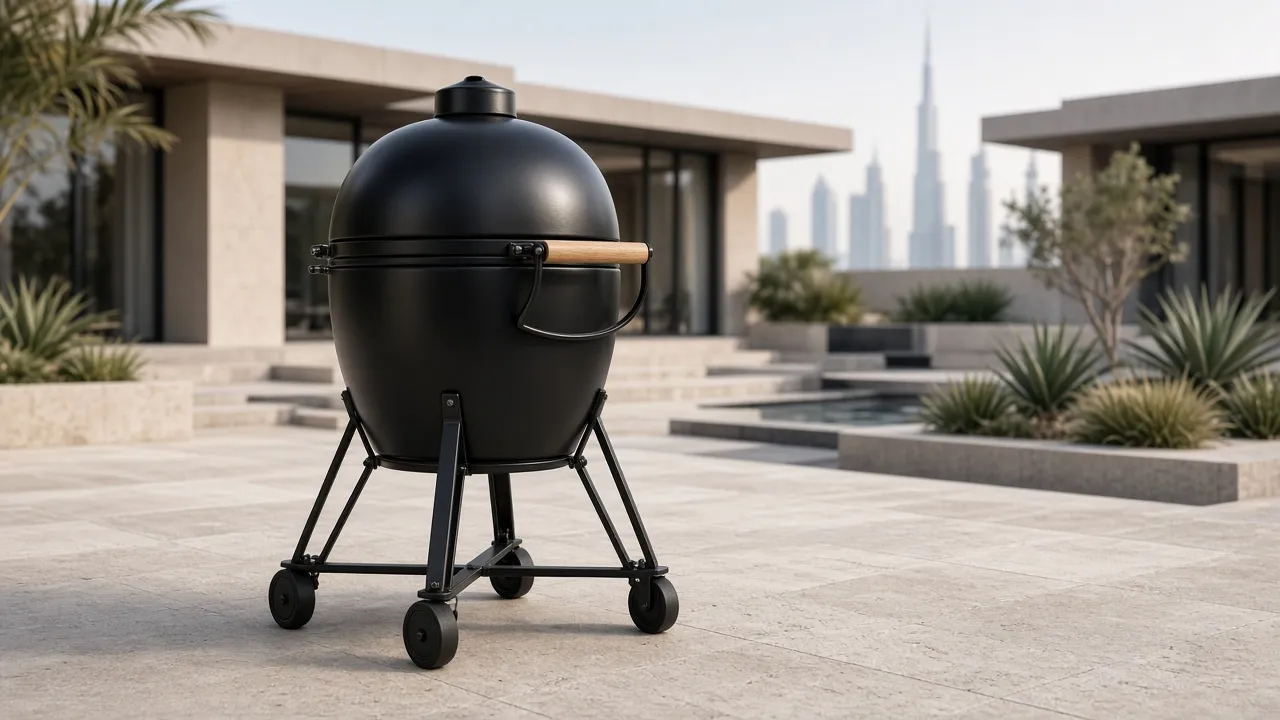 BUYING GUIDES
How Much Does a Kamado Grill Cost in the UAE? 2026 Price Guide
Kamado grill prices in the UAE: Burnt Carbon from AED 1,500 (15″) to AED 8,435 (27″). Free delivery to all seven emirates. See the full AED table.