
HOW-TO
How to Cook Mandi and Madfoon on a Kamado
How to cook mandi and madfoon (matfoon) on a kamado: indirect heat, a 120°C dome, oak in the lump, a foil wrap at hour six and a rest in the closed dome.
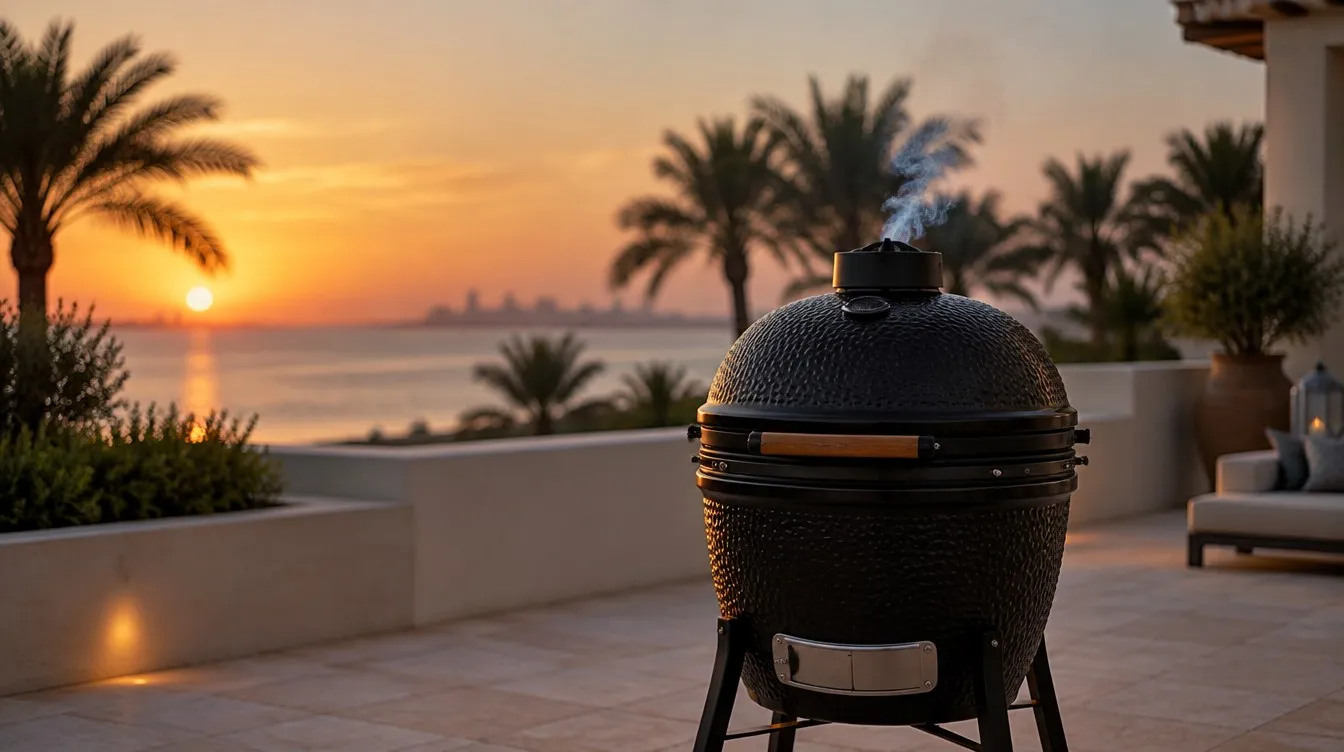
To cook mandi or madfoon on a kamado, cook indirect and low: heat deflector in, a full load of lump with oak buried in it, and the dome settled at 120°C. Smoke the lamb for six hours, wrap it in foil, cook on until the bone wiggles loose, then rest it in the closed dome.
Madfoon, also spelled matfoon, is the underground-pit tradition: low, even heat, sealed in, for hours. Mandi is its close relative, slow-cooked meat served over rice. A ceramic kamado does the same job above ground. The numbers on this page are the ones from our lamb shoulder matfoon recipe, so they agree with every other guide on the site. We do not publish a separate mandi recipe; on a kamado, the method below is the one we use for both.
How to cook madfoon on a kamado
Short answer: To cook madfoon on a kamado, fit the heat deflector, bury two oak chunks in 3.5 kg of lump and settle the dome at 120°C. Smoke a bone-in lamb shoulder for six hours, lid shut, then wrap it in foil and cook about four hours more until the bone wiggles loose. Rest it an hour in the closed dome.
- Rub the night before. Score the fat on a 2.5–3 kg bone-in lamb shoulder in a diamond pattern and work the spice paste into every cut. Our recipe uses bezar, crushed loomi, garlic, salt and ghee.
- Set up for indirect heat. Load 3.5 kg of hardwood lump with two oak chunks buried through it and fit the heat deflector between the coals and the grate, so the lamb cooks in hot air and smoke rather than over flame.
- Light and settle at 120°C. Set the top vent to a 2 mm crack and the bottom door to one finger’s width. Wait until the dome is steady at 120°C and the smoke runs thin and blue.
- Smoke with the lid closed for six hours. Put the lamb on fat side up, close the dome and leave it alone.
- Wrap at hour six. Brush the shoulder with saffron water, wrap it tightly in two layers of foil and put it back on.
- Finish until the bone wiggles. Cook on for about four more hours, until the blade bone wiggles loose, at around 95°C inside. Soak the rice at hour eight.
- Rest in the closed dome. Close both vents fully and leave the wrapped shoulder in the cooling dome for an hour, then pull it apart over rice cooked in the juices from the foil.
The full ingredient list and quantities are on the lamb shoulder matfoon recipe. Where the deflector sits, and why a low cook needs it, is in kamado heat deflector and two-zone cooking. The shoulder fits every Burnt Carbon kamado from the 18″ up; the smallest that fits is the 18″ Compact kamado with a 39 cm grate, which feeds 4–6.
Mandi vs madfoon on a kamado
On a kamado the two share one method. The difference is the dish, not the fire.
| Madfoon (matfoon) | Mandi | |
|---|---|---|
| What it is | The underground-pit tradition: low, even heat, sealed in, for hours | A close relative: lamb or chicken cooked slowly and served over rice |
| Spelling | Madfoon and matfoon are the same dish; our recipe says matfoon | Mandi |
| On our site | The lamb shoulder matfoon recipe: a 2.5–3 kg bone-in shoulder, serves 8 | No separate mandi recipe; we use the madfoon method |
| Served with | Rice cooked in the juices from the foil | Rice |
| Kamado setup | Indirect, heat deflector in | The same |
| Coal | 3.5 kg lump + 2 oak chunks | The same |
| Dome | 120°C | The same |
| Time | About 10 hours, then an hour’s rest in the closed dome | The same for a lamb shoulder |
| Grill size | 18″ and up | 18″ and up for a lamb shoulder |
Why a kamado suits mandi and madfoon
A pit works because it traps heat and moisture around the meat for hours. A kamado does the same three things.
- Indirect heat. The heat deflector sits between the coals and the grate, so the lamb cooks in hot air and smoke, not over flame.
- Low and slow. Thick ceramic holds a low temperature on very little air. Our matfoon runs at 120°C, inside the usual 110–135°C low-and-slow range, for about ten hours on one load of coal.
- Sealed, covered cooking. The domed lid stays shut, so moisture stays in and the meat dries out far less than on an open grill. Wrapping the shoulder in foil at hour six traps the juices.
- Ceramic heat retention. Once the dome reaches temperature, the walls hold it steady with very little help. When you close both vents at the end, the cooling dome becomes a resting oven for the last hour.
If smoking on a kamado is new to you, read kamado low and slow: how to set up a kamado for smoking first. It explains the setup in more depth.
The fire setup
These are the settings from the recipe. They are for our kamados; vents differ by brand, so treat them as a starting point.
| Mandi and madfoon on a kamado | |
|---|---|
| Setup | Indirect, heat deflector in (comes with Divide & Conquer) |
| Coal | 3.5 kg lump + 2 oak chunks, buried in the coal |
| Dome | 120°C |
| Top vent | A 2 mm crack |
| Bottom door | One finger’s width |
| Time | About 10 hours |
| Grill size | 18″ and up |
The vent positions for every other temperature are in the kamado vent settings and temperature guide.
The charcoal
A ten-hour cook needs a fire that keeps breathing through two small vents. Use large-piece hardwood lump with no chemicals: it leaves little ash, so the air keeps moving. Oak buried in the coal gives the smoke. Never light it with lighter fluid, because the porous ceramic soaks up the chemicals and you taste them.
Which bag, and why lump over briquettes, is in the best charcoal for a kamado: lump vs briquettes. Ours is hardwood lump charcoal in Dubai, 8 kg for AED 150, and one bag covers this cook with lump to spare. Close both vents at the end and the unburnt coal lights again next time.
Common mistakes
- Lifting the lid. Every look lets heat and moisture out. Six hours closed means six hours closed.
- Putting the lamb on too early. Thick white smoke tastes bitter. Wait for thin blue smoke and a steady 120°C.
- Chasing the dome. Ceramic is slow to respond. Make small vent moves and give each one time before you change it again.
- Skipping the rest. The hour in the closed dome is part of the cook, not an extra.
The short version
Indirect heat, 120°C, oak in the lump, lid shut, foil at hour six, rest in the dome. That is mandi and madfoon on a kamado. The recipe is lamb shoulder matfoon, and it fits every size in the range from the 18″ up.
Questions people ask
Can you cook mandi on a kamado?
Yes. A kamado cooks indirect, low and sealed for hours, which is what slow-cooked lamb for rice needs. Fit the heat deflector, settle the dome at 120°C with oak buried in the lump, keep the lid shut, wrap the meat in foil at hour six and rest it in the closed dome.
Is it madfoon, matfoon or mandi?
Madfoon and matfoon are two spellings of the same dish; our recipe uses matfoon. Mandi is a close relative: lamb or chicken cooked slowly and served over rice. On a kamado they share one method: indirect heat, a low dome, a sealed lid and a long rest.
What temperature do you cook madfoon on a kamado?
Our lamb shoulder matfoon runs at a 120°C dome, with the top vent open a 2 mm crack and the bottom door one finger wide. That sits inside the 110–135°C low-and-slow range. Let the dome settle until the smoke runs thin and blue before the lamb goes on.
How long does madfoon take on a kamado?
About ten hours for a 2.5–3 kg bone-in lamb shoulder at 120°C: six hours of smoke, then about four more wrapped in foil, until the blade bone wiggles loose at around 95°C inside. Then rest it for an hour in the closed dome.
Do I need a heat deflector?
Yes. Slow-cooked lamb is an indirect cook, so the deflector sits between the coals and the grate and the meat cooks in hot air and smoke rather than over flame. Ours come with the Divide & Conquer system, which fits every size.
What size kamado do I need for a lamb shoulder?
Our lamb shoulder matfoon fits every Burnt Carbon kamado from the 18″ up, which has a 39 cm grate and feeds 4–6. For bigger gatherings, compare grate sizes on the range page.
Can you make madfoon without an underground pit?
Yes. Madfoon is traditionally cooked in an underground pit: low, even heat, sealed in, for hours. A ceramic kamado does the same job above ground. The thick walls hold 120°C steady, oak in the coal gives the smoke, the closed dome keeps the moisture in and wrapping the shoulder at hour six traps the juices.
Do you wrap madfoon in foil?
Yes, at hour six. Brush the lamb shoulder with saffron water, wrap it tightly in two layers of foil and put it back on until the blade bone wiggles loose, at around 95°C inside. Then close both vents and rest it, still wrapped, for an hour in the cooling dome.
What do you serve with madfoon or mandi?
Rice. Soak it at hour eight of the cook, then cook it in the juices from the foil once you unwrap the lamb, and pull the meat apart over the top. Mandi, too, is slow-cooked meat served over rice.
What charcoal should I use for madfoon?
Large-piece hardwood lump with no chemicals: our recipe loads 3.5 kg with two oak chunks buried in it. Lump leaves little ash, so air keeps moving through a ten-hour cook. Never use instant-light charcoal or lighter fluid; ceramic soaks up the chemicals.
FROM THE KILN
SLOW LAMB, ABOVE GROUND.
Every Burnt Carbon kamado from the 18″ up fits the lamb shoulder. Six sizes, seven glazes, free delivery to all seven emirates.
KEEP
READING.
ALL GUIDES →- HOW-TO
Kamado Low and Slow: How to Set Up a Kamado for Smoking
Set up a kamado for low and slow: fire, deflector, vents and wood. Settings from our 18-hour brisket, plus fixes for overshoot and dirty smoke.
 HOW-TO
Kamado Vent Settings and Temperature Guide: 120°C to 350°C+
Kamado vent settings from 120°C to 350°C+, taken from our recipes: smoking, roasting, searing and pizza. Plus how to fix overshoot and hold all night.
 HOW-TO
The Best Charcoal for a Kamado: Lump Charcoal vs Briquettes
Which charcoal belongs in a kamado? Lump vs briquettes, coconut and binchotan, how much each cook uses, and what charcoal really costs in the UAE.