HOW-TO
Kamado Glossary: Every Kamado Term, Explained Plainly
A plain-English kamado glossary: dampers and vents, heat deflector, pizza stone, fire box, fire ring, grates, gasket, lump charcoal, two-zone cooking and more.
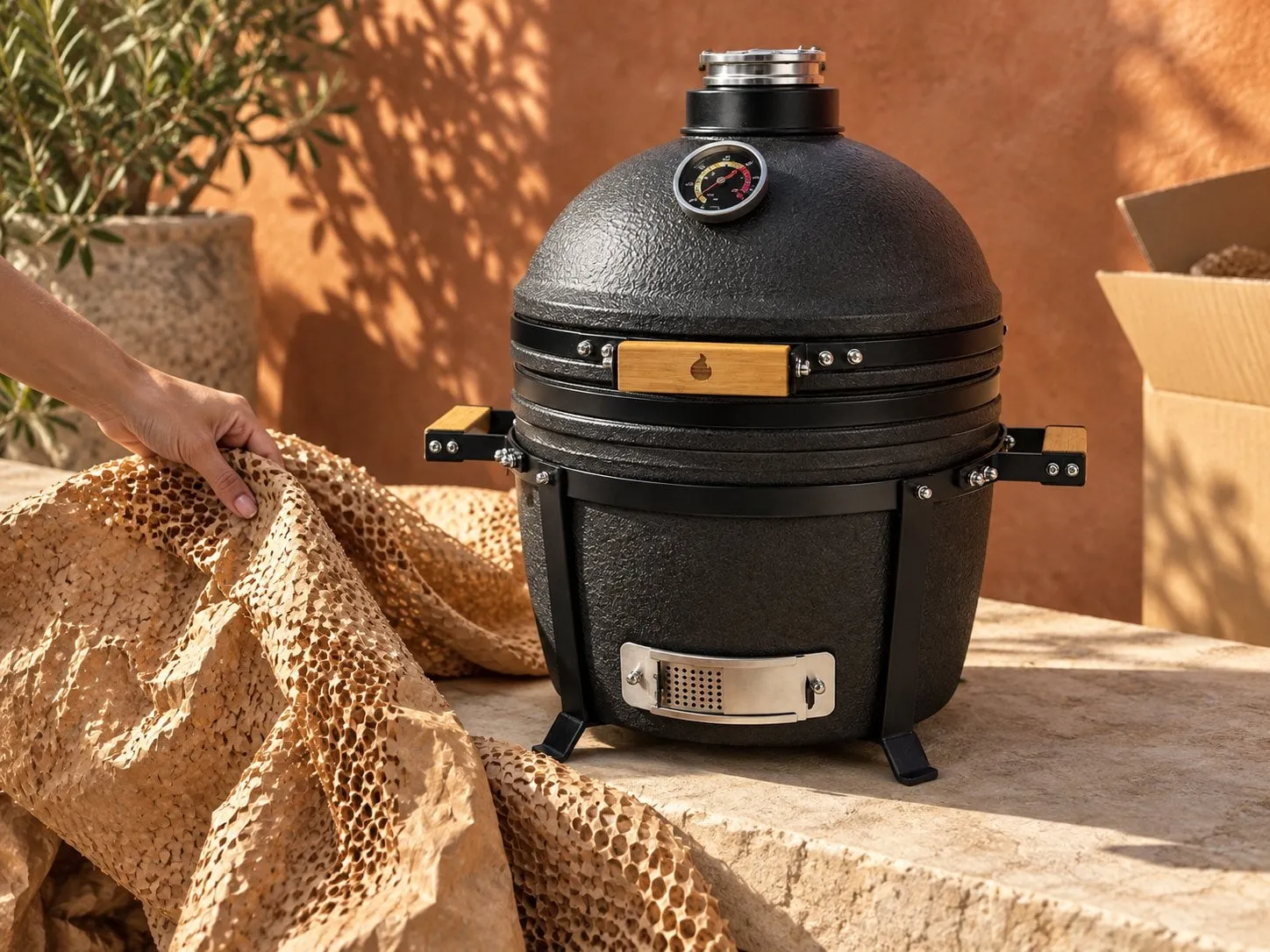
A kamado comes with its own vocabulary: dampers, deflectors, fire rings, burping. None of it is hard once someone says it plainly.
This is a plain-English glossary of kamado terms. Each definition matches how we use the word in our guides and recipes, so you can read any of them without getting lost. The short version: a kamado is a ceramic dome over a charcoal fire, and you control it with two vents, the bottom door and the top vent. Put a heat deflector in for indirect heat, take it out to grill direct, and keep the lid closed. For the one-page answer, read what is a kamado grill.
The full A to Z list is further down. First, the terms grouped by what they do, with links to the guide that goes deeper on each.
The parts of a kamado
From the bottom up: the ceramic base, the fire box that holds the coal, the stainless charcoal grate in the bottom of the fire box, the fire ring that sits on top of it, and the stainless cooking grate on the ring. The hinged ceramic dome carries the dome thermometer and the top vent. The bottom door is in the base. On our 23″, 25″ and 27″ you also get a smoker chute.
Where a kamado has a gasket, it seals the gap between the dome and the base. The full walk-through is in how to use a kamado grill.
Air and temperature
A damper is any adjustable vent. The bottom door feeds the fire and makes the big changes; the top vent fine-tunes. Dome temperature is the air in the dome, which is the number every recipe quotes. Burping the lid on a hot fire stops it flaring up at you. Every setting from 120°C to 350°C+ is in the kamado vent settings and temperature guide.
Heat setups
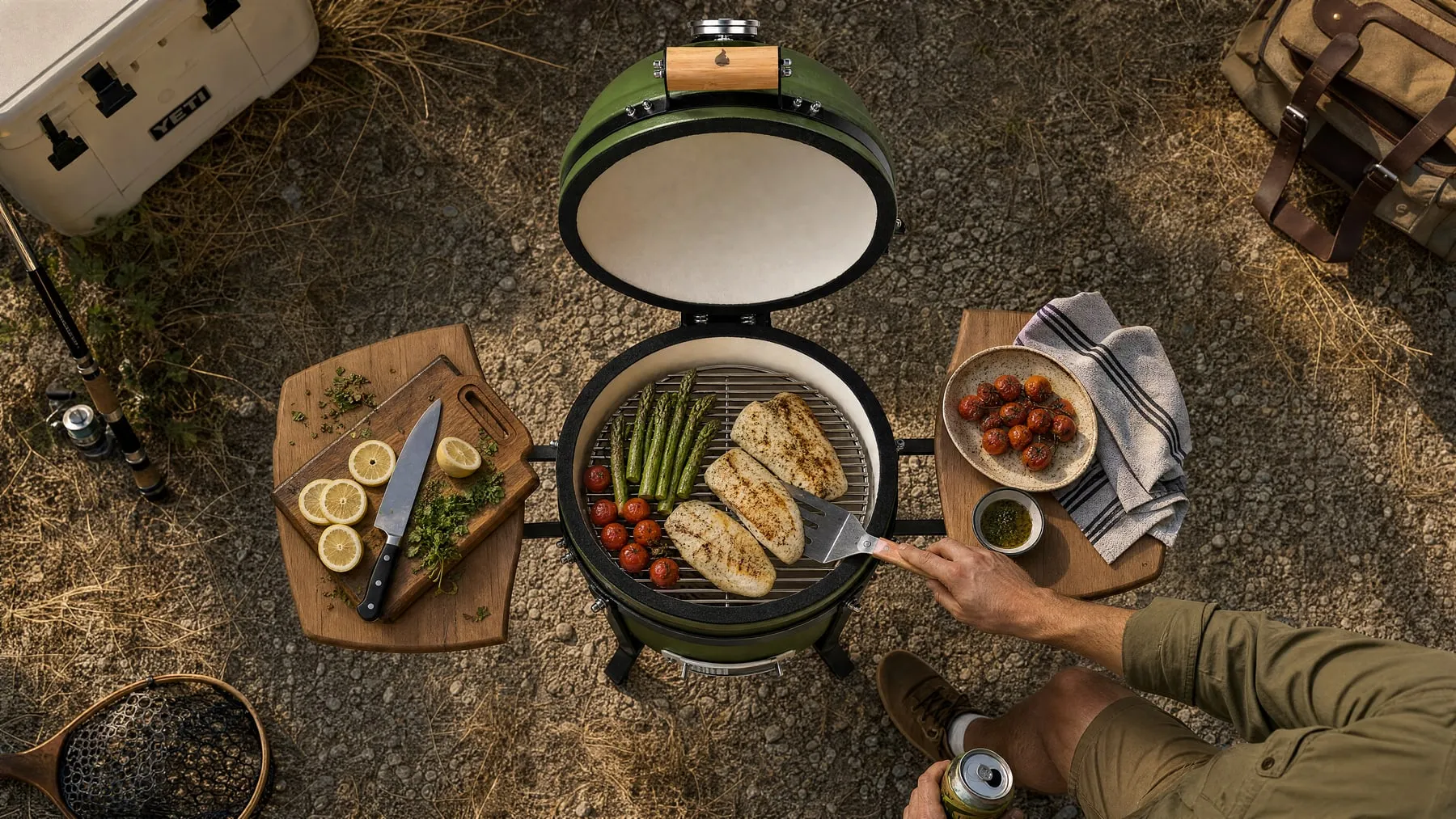
Direct heat means the food sits straight over the coal. Indirect heat means a heat deflector sits between them. Two-zone cooking, sometimes called divide and conquer, runs both at once under one dome; our split-level system does it with two half-moon grates and two heat deflectors. Which add-ons fit your size is in the kamado accessories guide. A pizza stone sits on the grate above the deflector: see pizza on a kamado. For low and slow, the stall and thin blue smoke, read low and slow smoking on a kamado.
Fuel
Lump charcoal is real hardwood, carbonised, with nothing added. Briquettes are pressed with a binder and make more ash. A chimney starter lights coal without chemicals. The full comparison is in the best charcoal for a kamado, and you can order our hardwood lump charcoal with delivery across the UAE.
Care and the first fire
Curing is the gentle first fire or two on a new kamado: it is step three of our First Fire guide. A burn-off cleans the inside with heat; see how to clean a kamado. After a shamal, check the vents and grates: our kamado care guide for the UAE climate covers sun, sand and humidity.
Buying words
Kamado sizes are often given in inches, but inch labels mean different things to different brands. Compare the cooking grate diameter in centimetres instead. Our sizes run from a 30 cm grate on the 15″ to 59 cm on the 27″: see what size kamado do I need, and, if you are comparing brands, Burnt Carbon vs Kamado Bono and the best kamado grills in the UAE.
Kamado terms, A to Z
- Kamado
- A thick ceramic charcoal grill with a domed lid. Air comes in at the bottom, feeds the fire and leaves through the top vent. The ceramic stores heat, so one load of coal holds a steady temperature for hours. It grills, smokes, roasts and bakes.
- Ceramic dome and base
- The two big ceramic pieces of a kamado. The base holds the fire; the dome is the hinged lid that closes over it. On a Burnt Carbon kamado these two make up the ceramic body, which carries our 25-year warranty against material defects.
- Damper (vent)
- An adjustable opening that controls how much air reaches the fire. A kamado has two. Open them to go hotter, close them to cool down, and shut both to put the fire out.
- Bottom door (bottom vent)
- The damper at the base. It feeds air straight into the coal, so it makes the big temperature changes. Our recipes set it in finger widths, from one finger for a long smoke to fully open for pizza.
- Top vent
- The damper on top of the dome (cast iron on ours). Hot air and smoke leave through it, which pulls fresh air in below. Use it to fine-tune. Keep it at least slightly open during a cook.
- Fire box
- The ceramic bowl inside the base that holds the charcoal. Coal loads are given against it, for example "half the fire box" for roasting and grilling.
- Fire ring
- The ceramic ring that sits on top of the fire box and carries the cooking grate. "Fill to the fire ring" means a full load of coal, for pizza and searing.
- Charcoal grate
- The stainless grate in the bottom of the fire box that the coal sits on. Air passes up through it, so keep it clear of ash and small bits of charcoal.
- Cooking grate
- The stainless grate the food goes on, resting on the fire ring. Its diameter is the fairest way to compare kamado sizes between brands.
- Heat deflector
- A ceramic plate that sits between the fire and the food, so the heat reaches the food indirectly. Put it in for smoking, roasting, baking and pizza; take it out for direct grilling and searing.
- Pizza stone
- A stone that sits on the cooking grate above the heat deflector and bakes the base of a pizza or flatbread. It needs a 30-minute heat-soak once the dome passes 350°C. Ours fits the 21″ and up.
- Direct and indirect heat
- Direct means the food sits straight over the coal, with no deflector, for grilling and searing. Indirect means the deflector is in, so no flame touches the food, for smoking, roasting and baking.
- Two-zone cooking (divide and conquer)
- Running a hot zone and a cool zone under one dome at the same time, for example searing on one side while ribs cook low and slow on the other. A split-level system with two half-moon grates and two ceramic heat deflectors makes it easy.
- Dome temperature
- The temperature of the air in the dome, read on the dome thermometer. It is the number every recipe quotes. It is not the temperature of the food; use a probe thermometer for that.
- Probe thermometer
- A thermometer pushed into the food to read its internal temperature. Cook to temperature, not time.
- Lump charcoal
- Pieces of real hardwood, carbonised, with nothing added. It burns hot and clean, reacts quickly to the vents and leaves little ash. It is the fuel a kamado wants.
- Briquettes
- Sawdust and char fines pressed into shape with a binder. They make more ash, which can choke a kamado's airflow on a long cook. Instant-light briquettes, soaked in chemicals, never belong in a kamado.
- Chimney starter
- A metal tube for lighting charcoal with paper or kindling underneath, without lighter fluid. It gives a fully lit bed of coal in minutes, ideal for hot, direct cooks.
- Smoking wood
- Wood chunks buried through the charcoal, or wood chips in a smoker box, to add smoke flavour. Our long cooks use oak chunks.
- Smoker chute
- A chute that comes with our larger kamados, the 23″, 25″ and 27″. Ask us how it is used on your size.
- Gasket
- The seal between the dome and the base, where a kamado has one. It helps the lid seal so the vents stay in control. Check it for fraying or gaps, and brush grit off the rim after a sandstorm.
- Curing (first fire)
- Breaking in a new kamado with a low, gentle first fire or two before you push it hard. It lets the seal between dome and base bed in. Our First Fire guide walks through it.
- Burping
- Lifting the dome a few centimetres and holding it for a few seconds before opening it fully on a hot fire. Fresh air arrives gently, so the fire does not flare up at you.
- Thin blue smoke
- The light, almost clear smoke of a settled fire. Wait for it before food goes on. Thick white smoke means the fire or fresh wood is still catching.
- Low and slow
- Cooking at about 120–130°C for many hours with the deflector in and both vents barely open, for brisket, ribs and lamb shoulder. Our brisket holds 125°C for 16 to 18 hours on one 4 kg load of lump.
- Reverse sear
- Cooking a thick steak low first, with the deflector in, then taking the deflector out and opening both vents to sear it hot at the end.
- The stall
- The hours during a long smoke when a brisket's internal temperature sits around 65–70°C and barely moves. It is normal. Do not open the lid and do not touch the vents.
- Burn-off (clean burn)
- Running the kamado hot with the dome closed so grease and food residue burn away, then brushing out what is left once it is cool. Clean the inside with fire, never soap.
- Shamal
- The strong north-westerly wind that brings sand and dust across the UAE. After one, brush the grates and check both vents still move freely before you light.
Questions people ask
What is a heat deflector?
A ceramic plate that sits between the fire and the food so the heat reaches the food indirectly. Use it for smoking, roasting, baking and pizza; take it out for direct grilling and searing. Our heat deflectors come with our split-level two-zone system, which fits every size.
What is a kamado damper?
A damper is an adjustable vent that controls the air reaching the fire. A kamado has two. The bottom door feeds the fire and makes the big changes; the top vent fine-tunes. Open them to go hotter, close them to cool down, shut both to put the fire out.
What is the difference between the fire box and the fire ring?
The fire box is the ceramic bowl in the base that holds the charcoal. The fire ring sits on top of it and carries the cooking grate. "Half the fire box" is a roasting load; "fill to the fire ring" is a full load for pizza and searing.
What is dome temperature on a kamado?
The temperature of the air inside the dome, shown on the dome thermometer. Every one of our recipes quotes it. It does not tell you how cooked the food is; use a probe thermometer for that.
Lump charcoal or briquettes for a kamado?
Lump. It is real hardwood with nothing added, burns hot and clean, and leaves little ash, so air keeps flowing on a long cook. Briquettes make more ash. Never use instant-light briquettes or lighter fluid, because ceramic soaks up the chemicals.
What does curing a kamado mean?
Breaking in a new kamado with a low, gentle first fire or two before cooking hot. It lets the seal between dome and base bed in. Save the screaming sear for the following weekend. Our First Fire guide walks you through it.
What is burping a kamado?
Lifting the lid a few centimetres for a few seconds before opening it fully on a hot fire. A hot kamado with nearly closed vents is short of air, and a sudden rush of oxygen can make the fire flare up. Burp it every time.
FROM THE KILN
NOW PUT THE WORDS TO WORK.
Every recipe gives you the coal load, both vent settings and the dome temperature. Start with the roast chicken at 180°C.
KEEP
READING.
ALL GUIDES → HOW-TO
What Is a Kamado Grill? A Plain Answer
What is a kamado grill? A thick ceramic charcoal grill with a domed lid and two vents. How it works, what it cooks, the fuel it needs and how to choose one.
 HOW-TO
How to Use a Kamado Grill: The Complete Guide
How to use a kamado grill, start to finish: charcoal, lighting, vents, direct and indirect heat, burping, shutting down and cleaning, UAE edition.
 HOW-TO
Kamado Vent Settings and Temperature Guide: 120°C to 350°C+
Kamado vent settings from 120°C to 350°C+, taken from our recipes: smoking, roasting, searing and pizza. Plus how to fix overshoot and hold all night.